
Emergency Dentistry
Knocked-Out Tooth Emergency in Pembroke, ON
Your Tooth Just Got Knocked Out. Here’s What to Do Right Now.
A knocked-out tooth is one of the few dental emergencies where every single minute matters. If you act quickly and correctly, there’s a real chance the tooth can be saved. If you wait, that window closes fast.
Call Parkview Dental: (613) 735-2336. Dr. James Munro will see you as fast as possible. A tooth reimplanted within 30 to 60 minutes has the highest chance of surviving. Our Pembroke dentist serves patients from Petawawa, Cobden, Deep River, and Chalk River, ON.
Advanced Diagnostic Technology for Faster Answers
When you’re in pain, waiting for an accurate diagnosis only adds to the stress of a dental emergency. Parkview Dental uses the iTero intraoral scanner to get a detailed 3D view of your teeth, gums, and jaw, which helps Dr. Munro pinpoint the source of a problem more precisely than traditional X-rays alone. This means less guesswork and a more direct path to the right treatment, whether that’s addressing a cracked tooth, an infection, or damage from an injury.
While You’re on Your Way: How to Keep the Tooth Alive
The root of your tooth has tiny ligament cells attached to it. Those cells need to stay moist and undamaged to give reimplantation the best possible chance. Here’s what to do in the minutes between the injury and getting to our office:
 Option 1 (best): Put it back in the socket. If you can manage it, gently reinsert the tooth facing the right direction and bite softly on a clean cloth to hold it. Don’t force it. If it doesn’t slide in easily, move to Option 2.
- Option 2: Store it in milk. Whole milk is the best readily available option. Its proteins and pH help keep root cells viable for 30 to 60 minutes or longer.
- Option 3: Hold it in your cheek. Tuck the tooth between your cheek and lower gum. Saliva is a reasonable short-term storage solution. Not recommended for children who might swallow it.
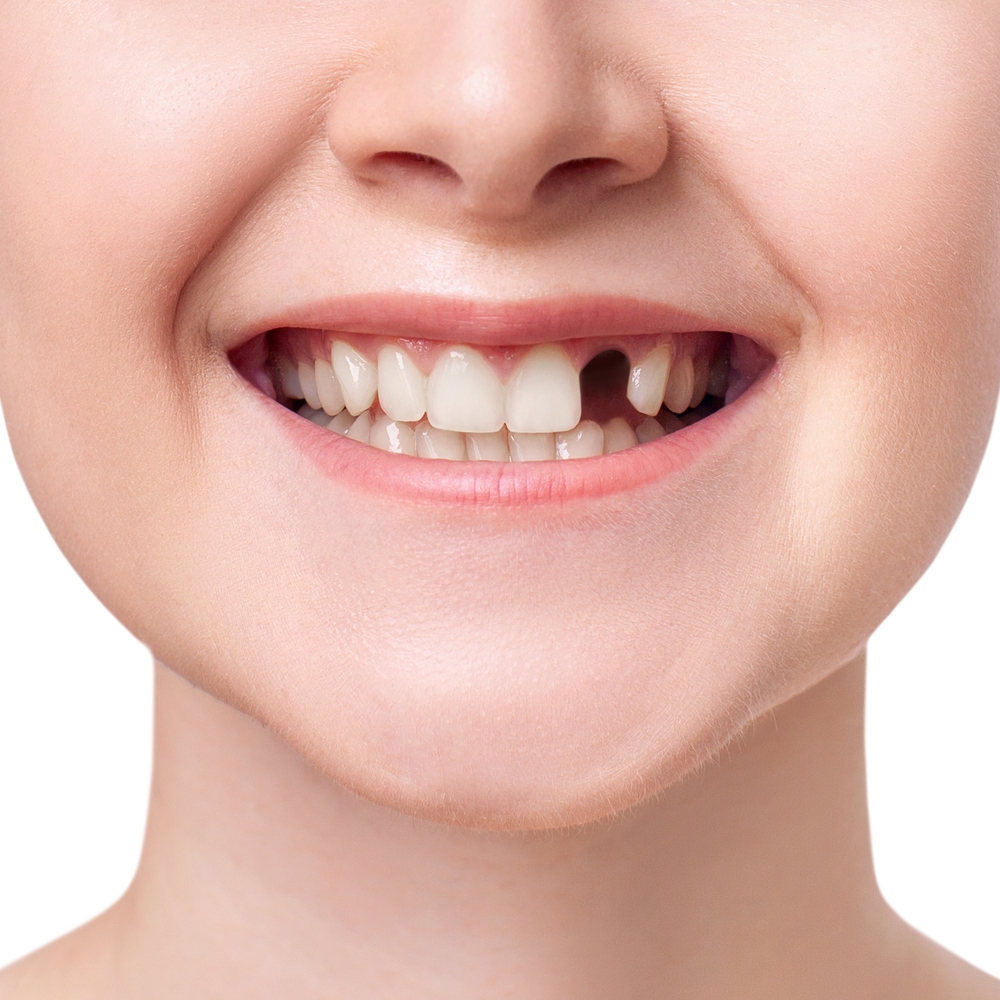 Option 1 (best): Put it back in the socket.
What not to do:
- Don’t store it in water because tap water damages root cells quickly
- Don’t wrap it in tissue or paper towel. It will dry out, and the cells will die
- Don’t scrub the root with anything
- Don’t let it sit on a counter while you decide what to do
Will the Tooth Actually Survive?
Honestly, it depends on several factors:
- Time. The single biggest factor. Teeth reimplanted within 30 minutes have survival rates that can exceed 90% in good conditions. After two hours out of the mouth, the odds drop significantly.
- Storage. Teeth stored in milk or back in the socket fare far better than those that dried out.
- The extent of the trauma. If the root is fractured, reimplantation may not be possible. Dr. Munro will tell you right away.
- Your overall dental and general health. Good bone density and healthy gums support better healing outcomes.
If reimplantation isn’t possible, Dr. Munro will discuss your options for replacing the tooth. Dental implants are typically the closest thing to a natural tooth replacement.
What Happens When You Arrive at Parkview Dental
Dr. Munro has a clear protocol for knocked-out tooth emergencies. In brief, you can expect:
- Immediate digital X-ray assessment of the tooth and socket
- Gentle cleaning and preparation of the socket
- Reimplantation and stabilization with a temporary splint
- Pain management and antibiotic prescription if needed
- Scheduling of a follow-up root canal (usually one to two weeks later)
Here’s the full breakdown:
Step 1: Immediate Assessment
Dr. Munro examines the tooth and the socket. Digital X-rays confirm whether the socket is intact and whether there’s any fracture to the jawbone or surrounding teeth.
Step 2: Socket Preparation
The socket is gently cleaned of any blood clots or debris. This is done carefully to preserve as much of the original socket structure as possible.
Step 3: Reimplantation
The tooth is placed back into the socket and positioned correctly. A splint (a thin wire or bonding material) is attached to the reimplanted tooth and the adjacent teeth to hold everything stable while healing begins. The splint typically stays in place for one to two weeks.
Step 4: Pain Management and Medication
Local anesthesia is used throughout. Dr. Munro may prescribe antibiotics to reduce infection risk and will recommend appropriate pain management for the days following the procedure.
Step 5: Follow-Up Appointments
A reimplanted tooth almost always requires a root canal one to two weeks later. The nerve inside the tooth typically doesn’t survive the trauma, and root canal treatment prevents infection from developing at the root. Dr. Munro will schedule and explain this at your emergency visit.
What If a Baby Tooth is Knocked Out Prematurely?
 Baby teeth are generally not reimplanted. Trying to reimplant a primary tooth can damage the developing permanent tooth underneath it. If your child has knocked out a baby tooth:
- Rinse their mouth gently with cool water
- Apply light gauze pressure if there’s any bleeding
- Call us right away, and we’ll guide you through next steps
- We’ll confirm whether the permanent tooth below was affected and what to watch for
Do not try to reimplant a baby tooth yourself.
Knocked-Out Tooth: Cost and Financing
Emergency reimplantation, including the splint and follow-up root canal, typically falls in the range of $800 to $2,000 depending on case specifics. Most major dental insurance plans cover emergency treatment and root canal therapy at least partially. Parkview Dental files insurance on your behalf and offers flexible payment arrangements for patients with partial or no coverage. Dr. Munro explains costs before treatment begins so there are no unexpected bills.
Frequently Asked Questions
My tooth got knocked out. Can I just go to the ER?
Emergency rooms can treat facial trauma, but they don’t have the tools or training to reimplant teeth. They can clean wounds, check for fractures, and manage bleeding, but for the tooth itself, you need a dentist. Call us while someone else drives you, or have someone call us on your behalf.
The tooth has been out for two hours or longer. Is it too late for reimplantation?
Possibly, but not definitely. Call us anyway and bring the tooth. The longer the delay, the lower the odds, but Dr. Munro will assess the tooth in person and tell you honestly whether reimplantation is viable.
I knocked a tooth loose, but it's still in my mouth. Is that an emergency too?
Yes. A tooth that’s been pushed sideways, deeper into the socket, or is visibly loose after trauma needs to be seen today. Don’t try to push it back into position yourself. Call us at (613) 735-2336.
Will I need a root canal even if I feel no pain?
Almost certainly yes, if the tooth was fully knocked out. The nerve doesn’t survive avulsion in most cases. A root canal is needed to prevent the root from becoming infected from the inside. Dr. Munro will explain the timing and what to expect.
What if I can't find the tooth after it’s knocked out?
Call our Pembroke dentist anyway so we can assess the socket and surrounding teeth for damage. If the tooth is gone, we’ll discuss your tooth replacement options at the appointment.