
Emergency Dentistry
Lost Filling or Dental Crown Emergency in Pembroke, ON
Your Filling Fell Out (or Your Crown). Now What?
It’s an unfortunately common experience: you’re eating something and suddenly feel something hard in your mouth that shouldn’t be there. Or you run your tongue across a tooth and notice a hole where smooth enamel used to be. Lost fillings and crowns aren’t always painful, but they do leave your tooth exposed and vulnerable, and the longer you wait, the more complicated the fix tends to get.
At Parkview Dental in Pembroke, Dr. James Munro sees patients for emergency dentistry as quickly as he can. Call (613) 735-2336 and we’ll get you in as soon as possible. We serve patients from Pembroke, Petawawa, Cobden, Deep River, and Chalk River, ON.
A Dentist You Can Verify Is Licensed and In Good Standing
Trusting someone with an emergency dental problem means trusting their credentials, and Dr. Munro’s are a matter of public record. He is licensed to practice in Ontario by the Royal College of Dental Surgeons of Ontario (RCDSO), the regulatory body responsible for holding dentists to professional and ethical standards across the province. Patients can look up his registration directly through the RCDSO’s public register, giving them an added layer of confidence before they ever sit in the chair. Call (613) 735-2336 to schedule emergency care with a dentist whose credentials are fully verifiable.
Lost Filling vs. Lost Crown: What’s the Difference?
They’re similar situations but not identical.
Lost Filling
A dental filling (typically composite resin or amalgam) has come out, leaving a hole or crater in the tooth. The tooth underneath may be sensitive to temperature, air, or pressure. How urgent it is depends on the size of the filling and whether the tooth is painful.
Lost Crown
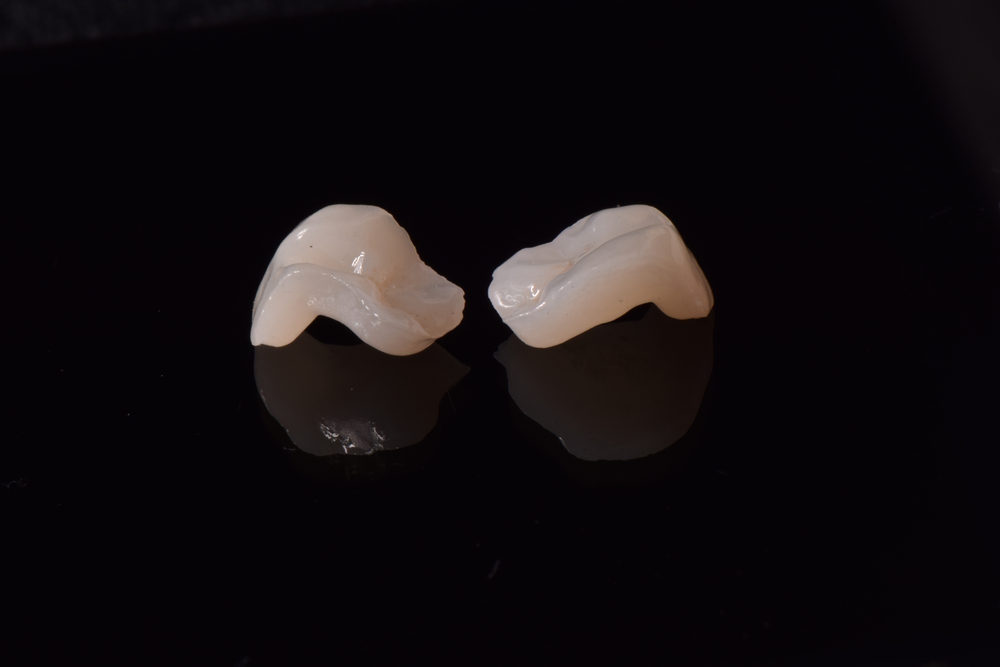
A dental crown is a cap that covers an entire tooth. When a crown comes off, it often comes off intact. The tooth underneath, which was typically ground down to a peg shape before the crown was placed, is now exposed. This tooth is almost always sensitive and vulnerable to fracture. It needs to be covered as soon as possible.

Is a Lost Dental Restoration an Emergency?
It depends on a few factors:
Call us the same day if:
- The tooth underneath is in significant pain or extremely sensitive
- You can see the exposed tooth, and it looks dark or decayed
- The tooth feels sharp or has a jagged edge that’s cutting your cheek or tongue
- You had the crown or filling placed over a root canal tooth (no natural sensation, but still structurally important)
- The crown has come off, and you’re uncomfortable leaving the tooth exposed
Call within 24 to 48 hours if:
- There’s only mild sensitivity, and you can function comfortably
- You’ve been able to temporarily cover the area and pain is minimal
Either way, don’t put it off more than a few days. Exposed teeth decay faster than intact ones, and a simple re-cement can turn into a root canal if bacteria get in.
What You Can Do At Home After a Dental Crown or Filling Has Come Off
If your filling fell out:
- Rinse your mouth gently with warm water
- Pick up pharmacy dental cement (Dentemp, Fixodent, or similar) and follow the instructions to temporarily fill the hole. This protects the tooth and reduces sensitivity
- Alternatively, a small piece of sugar-free gum (not sugar-containing) can cover the opening temporarily after you’ve rinsed the area
- Avoid chewing on that side until you’ve seen Dr. Munro
- Avoid very hot, cold, or sweet foods that will aggravate an exposed nerve
If your crown came off:
 Don’t throw the crown away. Bring it to your appointment. In many cases it can be re-cemented.
- Try to slip the crown back onto the tooth temporarily to protect it. It should seat fairly naturally. Don’t bite down hard on it to force it into place.
- If the crown doesn’t stay on its own, apply a thin layer of pharmacy dental cement inside the crown before placing it
- Never use household adhesives like super glue. They damage both the crown and the underlying tooth and make re-cementing significantly more difficult
- If the tooth under the crown is sharp or uncomfortable and the crown won’t stay, use dental wax to cover the exposed tooth temporarily
 Don’t throw the crown away. Bring it to your appointment. In many cases it can be re-cemented.
Why Did My Dental Crown Fall Out? Common Causes
Fillings and crowns don’t usually come out randomly. There’s almost always an underlying reason:
- Decay under the restoration. The most common reason crowns loosen. Bacteria get under the margin over time, causing decay that breaks the seal between tooth and crown.
- Wear and age. Fillings and crowns don’t last forever. Composite fillings typically last 7 to 10 years; amalgam and crowns can last longer, but eventually all restorations need replacement.
- Biting hard foods or objects. Popcorn kernels, ice, hard candy, and using teeth as tools are common culprits.
- Grinding (bruxism). Excessive grinding force wears down restorations faster and can pop crowns off.
- Improper fit from the start. Occasionally, a crown wasn’t perfectly fitted or cemented, and it loosens earlier than expected.
- Failing cement. The adhesive under a crown does break down over time, especially with repeated exposure to acids in food and drink.
What Happens at Your Appointment
Examination
Dr. Munro examines the tooth and takes X-rays if needed to check for decay under the restoration and to assess the health of the root and surrounding bone.
If the Crown Can Be Re-Cemented
If the crown is intact and the tooth underneath is in good shape, the crown can often be cleaned and re-cemented in a single appointment. This is the simplest outcome and takes about 30 to 45 minutes.
If There’s Decay Under the Crown
Decay must be removed before the crown is reinstalled. Depending on how much tooth structure remains, Dr. Munro may be able to place a new filling and re-cement the existing crown, or a new crown may need to be fabricated.
If the Tooth Needs Further Treatment
Sometimes a lost crown reveals that the tooth underneath has fractured or that the nerve has become involved. Dr. Munro will clearly walk you through the options before any treatment begins: root canal therapy, a new crown, or, in serious cases, extraction, with a discussion of replacement options.
Temporary Crown
If a new permanent crown needs to be fabricated (which takes a lab turnaround of a few days to a couple of weeks), a temporary crown is placed at your appointment to protect the tooth in the meantime.
Cost & Financing
 If there’s underlying decay or a root canal is needed, those costs apply on top of the restoration. Dr. Munro explains all costs before starting treatment.
- Re-Cementing an Existing Crown: generally $150 to $400, depending on what’s involved
- New Filling: typically $150 to $400, depending on size and material
- New Crown: usually $1,000 to $1,800
Most dental insurance plans cover crowns at a partial level, typically 50%, subject to waiting periods and maximums. Our team verifies your coverage before treatment begins. Flexible payment plans are available for patients without coverage.
Frequently Asked Questions
My crown fell off, but it doesn't hurt at all. Can I wait a week or two?
Probably okay for a short period if you have temporary cement on it or the crown back in place, but don’t stretch it much longer. The exposed tooth is at real risk of fracture. A root canal tooth, especially, since it’s more brittle than a natural tooth. Call us and get on the schedule.
What do I do if I swallowed my dental crown?
First: don’t panic. If it were a small crown, it would almost certainly pass without issue. Call us. We’ll need to fabricate a new one or check if there’s an X-ray on file to match it, if a duplicate can be made. If you’re having any trouble breathing, call 911.
My filling keeps falling out of the same tooth. Why does that keep happening?
Repeated filling failure in the same tooth is a sign that a filling isn’t the right solution anymore. The tooth may have decay that keeps reforming, a structural issue, or enough damage that a crown would be more appropriate. Dr. Munro can assess what’s actually going on.
Can I eat with a temporary crown?
Yes, but carefully. Stick to softer foods, chew on the opposite side, and avoid anything particularly sticky like caramel or gum. Temporary crowns are designed to stay in place, but they’re not as durable as permanent ones.
Why should I not use super glue to replace my dental crown?
Super glue and similar household adhesives are toxic in the mouth, can cause chemical burns to gum tissue, and make it very difficult to properly re-cement or remove the crown later. If you’ve used any household adhesive in a moment of panic, don’t be embarrassed. Just let Dr. Munro know when you call so he can plan accordingly.
How long do fillings and crowns typically last?
Composite resin fillings often last 7 to 10 years on average, though many last longer with good care. Amalgam fillings can last 10 to 15 years or more. Meanwhile, porcelain or ceramic crowns can last 10 to 15 years, while metal or porcelain-fused-to-metal crowns can last 15 to 25 years. Regular dental checkups help catch restorations that are starting to fail before they come out unexpectedly.