
Emergency Dentistry
Signs of a Dental Emergency in Pembroke, ON
Knowing the Warning Signs Could Save Your Tooth
Dental emergencies don’t always announce themselves dramatically. Some begin with a dull ache that suddenly spikes. Others show up as a swollen cheek you’ve been dismissing for days. Understanding which symptoms demand immediate attention and which can wait a day or two is one of the most practical things you can know as a dental patient.
At Parkview Dental in Pembroke, ON, Dr. James Munro has been helping patients recognize and respond to dental emergencies for nearly 50 years. Our goal is always to keep you informed, calm, and in control of your oral health, even when a crisis hits.
If something in your mouth feels wrong, trust that instinct. It’s always better to call and find out it wasn’t an emergency than to wait and discover it was. Call our dental office in Pembroke at (613) 735-2336. We serve patients from Petawawa, Cobden, Deep River, and Chalk River, ON.
iTero Digital Impressions: Eliminating Guesswork for Faster Restorative Care After Dental Emergencies
With the iTero’s digital impressions and radiographs, Dr. Munro creates a level of shared understanding that changes everything. You and he sit side-by-side reviewing the crystal-clear 3D model together, so he can explain every detail of your treatment plan in plain language—whether it involves crowns, bridges, or custom dentures—turning what could feel abstract into something clear, visual, and completely transparent.
What Is a Dental Emergency?
A dental emergency is any oral health situation requiring immediate care to stop severe pain, prevent infection, or save a tooth or surrounding tissue. Unlike routine dental concerns such as mild sensitivity or a slightly chipped edge, true emergencies involve rapid deterioration, uncontrolled symptoms, or trauma that demands same-day attention. Common examples include knocked-out teeth, dental abscesses, severe toothaches, and significant mouth injuries.
Signs You Are Experiencing a Dental Emergency
Not every dental concern rises to an emergency level, but these symptoms do. If you’re experiencing any of the following, call our Pembroke office right away.
- Severe, persistent tooth pain that doesn’t respond to over-the-counter pain relief
- Facial or gum swelling, especially if it’s worsening or accompanied by fever
- A knocked-out or partially dislodged tooth from trauma, sports injury, or accident
- Uncontrolled bleeding from the mouth that doesn’t stop after 10 to 15 minutes of pressure
- A visible abscess or pimple-like bump on the gums, which indicates active infection
- A broken tooth with jagged or sharp edges, causing soft tissue damage or nerve pain
- Jaw pain or limited jaw movement following trauma or a sudden onset
Severe Tooth Pain
A toothache that is intense, throbbing, or constant is one of the most reliable signs of a dental emergency.
 What It Might Indicate
 What It Might Indicate
- Deep decay that has reached the nerve of the tooth
- A cracked tooth with exposed inner layers
- A dental abscess or bacterial infection brewing beneath the surface
What to Do
Rinse with warm water, take ibuprofen or another over-the-counter pain reliever (avoid placing aspirin directly on the gum), and call Dr. Munro immediately. Do not assume the pain will resolve on its own.
Knocked-Out Tooth
A fully avulsed (knocked-out) tooth is one of the most time-sensitive situations in dentistry. Acting within 30 to 60 minutes dramatically improves the chances of saving the tooth.
Immediate Steps
- Pick up the tooth by the crown, not the root
- Rinse gently with clean water — do not scrub
- Try to reinsert it into the socket, or store it in milk or saline
- Call us at (613) 735-2336 and head to our office right away
Cracked or Broken Tooth
A tooth that has fractured, whether from biting something hard, a fall, or sports trauma, can expose sensitive nerves and leave the tooth vulnerable to infection.
 Signs Your Tooth Is Broken
 Signs Your Tooth Is Broken
- Sharp or jagged edge you can feel with your tongue
- Sudden sensitivity to temperature or pressure
- Visible crack or missing piece of tooth structure
- Pain when biting down that wasn’t present before
What to Do
Rinse with warm water, apply a cold compress to your cheek to manage swelling, save any broken fragments, and contact our office the same day.
Dental Abscess
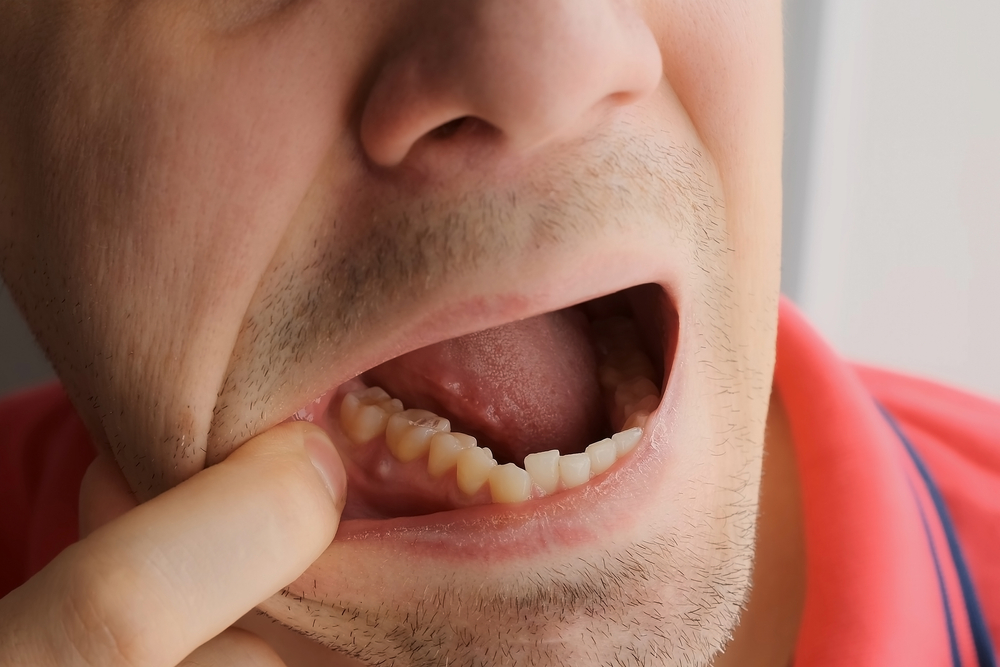
An abscess is a bacterial infection that forms a pocket of pus at the root of a tooth or in the gum tissue. This is a serious condition that can spread beyond the mouth if left untreated.
Symptoms of a Dental Abscess
 Symptoms of a Dental Abscess
- Throbbing, severe pain that may radiate to the jaw or ear
- Swelling in the face, jaw, or lymph nodes
- Fever or a general feeling of being unwell
- A pimple-like bump on the gum near the affected tooth
- Foul taste or persistent bad breath
Rinse with warm saltwater and call our office immediately. An untreated abscess can progress to a life-threatening infection.
Uncontrolled Bleeding
Bleeding from the gums, tongue, or cheeks is considered an emergency when it doesn’t stop after 10 to 15 minutes of consistent direct pressure.
- Apply clean gauze firmly to the area and maintain pressure without lifting to check frequently
- Use a cold compress on the outside of your face to help reduce blood flow
- If bleeding is severe, worsening, or accompanied by trauma, seek emergency care immediately
- Mild post-procedure bleeding that slows over time is generally normal and not an emergency
Loose or Partially Dislodged Tooth
A permanent tooth that is loose or shifted out of position following trauma requires urgent care to stabilize it before it is lost entirely.
- Do not attempt to force the tooth back into position on your own
- Bite gently on clean gauze to help keep the tooth stable during transport to our office
- Avoid eating or drinking on that side of your mouth
- Time is a significant factor — the sooner Dr. Munro can evaluate the tooth, the better the outcome
Lost Filling or Crown
While a lost filling or crown isn’t always immediately painful, it does leave the underlying tooth exposed and vulnerable.
Is This an Emergency?
- If there is sharp pain, significant sensitivity, or jagged edges causing soft tissue injury — yes, call us same day
- If there is no pain and the issue is cosmetic, you can typically be seen within a day or two
- Apply dental cement from a pharmacy or sugar-free gum to cover the area temporarily while you wait
Jaw Pain or Injury
 Jaw pain following trauma, or jaw pain that comes on suddenly with no clear cause, should always be evaluated promptly.
- A fractured jaw requires emergency medical attention; stabilize the jaw and go to the nearest emergency room
- TMJ-related jaw pain that is sudden and severe warrants a call to our office
- Difficulty opening or closing the mouth, or a jaw that feels locked, is an urgent concern
- Swelling along the jaw line, combined with tooth pain, may signal a spreading dental infection
Benefits of Responding to Emergency Signs Quickly
Acting fast doesn’t just reduce pain. It changes outcomes in meaningful ways.
- Tooth preservation: Knocked-out and cracked teeth can often be saved with prompt treatment; delays reduce that window significantly
- Infection control: Catching an abscess early keeps it localized and manageable; a spreading infection is far more serious
- Lower treatment costs: Small problems treated promptly are almost always less expensive than the same problems addressed after weeks of neglect
- Faster recovery: Early intervention typically means a shorter, more comfortable healing process
- Peace of mind: Knowing the cause of your pain and having a treatment plan in place reduces anxiety significantly
Frequently Asked Questions
How do I know if my toothache is a true emergency?
If the pain is severe, constant, or accompanied by swelling, fever, or sensitivity that doesn’t subside, it’s an emergency. Call Dr. Munro right away. A dull ache that is mild and intermittent can often wait a day or two, but should still be evaluated promptly.
Can a cracked tooth heal on its own?
No. Cracks do not repair themselves and will typically worsen over time under normal chewing pressure. Even a hairline fracture can eventually split a tooth if untreated. Early care is always the better choice.
My child knocked out a baby tooth. Is that an emergency?
Baby teeth should generally not be reimplanted, as doing so can interfere with the permanent tooth developing beneath it. However, you should still call our office. Dr. Munro can assess the injury and monitor the area for proper healing.
What should I do if I can't reach the dentist right away?
Manage pain with ibuprofen, apply cold compresses for swelling, rinse with warm saltwater, and take steps to keep a knocked-out tooth moist. Avoid eating on the affected side and try to reach our office as soon as possible at (613) 735-2336.
Is a lost crown really an emergency?
It depends on your symptoms. Pain, extreme sensitivity, or jagged tooth structure that’s cutting your tongue or cheek warrants a same-day call. If it’s painless and cosmetic, you can typically be seen within a day or two.
What causes dental abscesses, and can they be serious?
Abscesses are caused by bacterial infection, typically from untreated decay, a cracked tooth, or advanced gum disease. They are serious and should never be ignored. In rare cases, untreated abscesses have led to life-threatening infections spreading to the jaw, neck, or beyond.