
Children’s Dentistry
Common Dental Problems in Children in Pembroke, ON
What Every Renfrew County Parent Should Know
Children’s mouths change fast. New teeth come in, old ones fall out, habits form, and sometimes problems develop quietly between dental visits. Knowing what to watch for helps parents act early rather than reactively.
At Parkview Dental in Pembroke, ON, we’ve been helping families navigate children’s oral health since 1976. Some of the problems covered on this page are so common that we see them nearly every week. Others are less frequent but equally important to catch early. All of them are more manageable when identified at a routine checkup rather than when they become painful.
If your child has been complaining about tooth pain or you’ve noticed something that doesn’t look right, don’t wait. Call Parkview Dental at (613) 735-2336 for children’s dental care. Serving families in Petawawa, Cobden, Deep River, and Chalk River, ON.
Why Choose Parkview Dental for Your Child’s Dental Care
Identifying and managing children’s dental problems requires experience, the right technology, and a patient approach that keeps kids calm enough to cooperate.
- iTero intraoral scanner: Our 3D digital scanner detects cracks, decay, and developmental changes that are invisible to the naked eye, without the discomfort of traditional X-ray equipment
- Sedation available for anxious children: Dr. Munro is licensed to administer dental sedation, making it possible for even the most apprehensive child to receive a thorough exam and treatment
- One-on-one care with Dr. Munro: Every child meets directly with Dr. Munro, who takes time to explain findings to both the child and parent in plain, reassuring language
- Nearly 50 years of family dentistry experience: Since 1976, Parkview Dental has treated generations of Renfrew County families, including the full spectrum of childhood dental conditions

Tooth Decay (Dental Caries)
Tooth decay is the single most common chronic childhood health condition — more common than asthma in school-age children. It develops when bacteria in the mouth feed on sugars and produce acids that erode tooth enamel.
 Signs of Tooth Decay in Children
 Signs of Tooth Decay in Children
- White, brown, or black spots on tooth surfaces
- Complaints of tooth pain or sensitivity to sweet, hot, or cold
- Visible holes or pitting in teeth
- Pain when chewing
How We Treat It
- Early-stage decay: Fluoride treatment or dental sealants can sometimes stop progression
- Established cavities: Tooth-colored composite fillings restore the tooth comfortably
- Advanced decay in baby molars: A stainless steel crown may be recommended to protect the tooth until it naturally falls out
Prevention at Home
- Brush twice daily with a fluoride toothpaste appropriate for your child’s age
- Limit juice, sports drinks, and sugary snacks, especially between meals
- Make water the default drink between meals and after sweets
Gum Disease in Children
Gum disease isn’t just an adult problem. Gingivitis, the earliest and most reversible stage, is surprisingly common in children and teenagers, often linked to inconsistent brushing and flossing habits.
Signs of Gingivitis in Children
- Gums that bleed during brushing or flossing
- Swollen, red, or puffy-looking gum tissue
- Persistent bad breath that doesn’t resolve with brushing
How We Treat It
Professional dental cleaning at Parkview Dental removes the tartar buildup that home brushing can’t reach. Dr. Munro reviews brushing and flossing techniques with your child during the visit and provides practical, age-appropriate guidance for improvement.
Caught at the gingivitis stage, gum disease is fully reversible with improved hygiene and consistent professional care.
Tooth Sensitivity
Sensitivity to cold, sweet foods, or temperature changes is one of the most common complaints we hear from children and their parents. It’s worth taking seriously rather than dismissing.
- Possible causes: Thin enamel, early decay, a crack in the tooth, or gum recession exposing the root surface
- What to do: Note when the sensitivity occurs and how long it lasts, then call our office for an evaluation
- Diagnosis with iTero imaging: Our intraoral scanner can identify structural issues contributing to sensitivity that a visual exam alone might miss
- Treatment: Depends on the cause; options range from fluoride application to fillings to monitoring
Teeth Grinding (Bruxism)
Many children grind their teeth during sleep, and most parents only discover it when they hear the sound. Mild grinding in young children often resolves on its own, but persistent grinding causes real damage.
Signs Your Child May Be Grinding
- Worn-down, flattened, or chipped tooth surfaces
- Complaints of jaw soreness or headaches in the morning
- Audible grinding sounds during sleep
- Increased tooth sensitivity
How Dr. Munro Addresses Bruxism
Dr. Munro evaluates the wear pattern on your child’s teeth and, if grinding is significant, can fit your child with a custom nightguard to protect enamel during sleep. A store-bought guard is a poor substitute — a properly fitted one from our office stays in place, distributes force correctly, and is far more comfortable for a child to wear consistently.
Misaligned Teeth and Bite Problems
 Crowded, crooked, or misaligned teeth in children are incredibly common and not always a sign of a problem that needs immediate treatment. However, some alignment concerns benefit significantly from early identification.
- Crowding: Occurs when there isn’t enough space for permanent teeth to come in properly; early assessment helps determine whether intervention will be needed
- Overbite and underbite: Significant bite discrepancies identified early are often easier and less expensive to treat during growth than after it is complete
- Crossbite: When upper teeth sit inside lower teeth, it can cause uneven jaw growth if left unaddressed
- Early referral when needed: Dr. Munro monitors bite development at every visit and provides referrals to orthodontic specialists when the timing is right
Tooth Eruption Problems
Most children’s teeth follow a reasonably predictable eruption timeline, but delays, early arrivals, or teeth coming in at unusual angles do happen.
Common Eruption Concerns
- Delayed eruption: A tooth that hasn’t appeared by the expected developmental milestones warrants evaluation
- Retained baby teeth: Sometimes a baby tooth doesn’t fall out when it should, blocking the permanent tooth beneath it
- Ectopic eruption: A permanent tooth that is coming in at the wrong angle, often requiring intervention to guide it into position
Dr. Munro monitors eruption patterns at every routine visit, using iTero imaging to track what’s happening beneath the gum line before it becomes visible.
Dental Anxiety and Avoidance
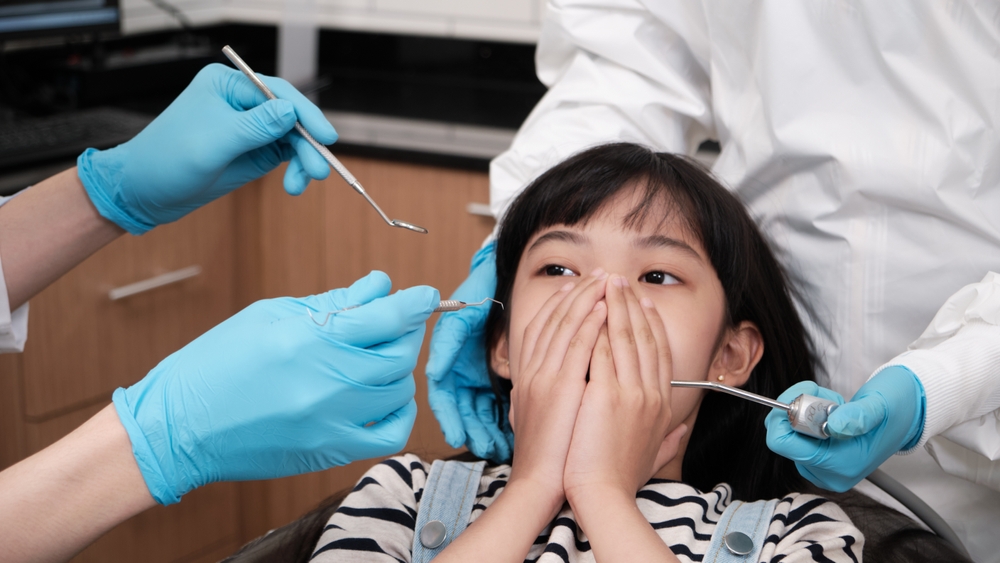 Dental anxiety in children is itself a dental health problem. Children who avoid the dentist out of fear accumulate untreated decay and develop habits and attitudes that follow them into adulthood.
At Parkview Dental, we take dental anxiety seriously as a clinical concern, not just a behavior management challenge.
- Dr. Munro’s patient, one-on-one approach: Every child meets with Dr. Munro before treatment begins, giving them time to ask questions and feel seen
- Child-friendly explanations: We explain every step of a procedure in age-appropriate language, so nothing is a surprise
- Nitrous oxide (laughing gas): A safe, mild sedative that takes the edge off anxiety quickly and wears off fast
- Oral sedation: For more significant anxiety or longer procedures, oral sedation provides a deeper level of calm
- No judgment: Children who have had difficult dental experiences elsewhere are welcomed without commentary
Oral Habits That Affect Dental Health
Thumb sucking, pacifier use, and nail-biting are normal parts of childhood development — up to a point. When these habits persist past age three or four, they can begin to affect how the teeth and jaw develop.
- Thumb sucking: Prolonged habits can push front teeth forward, creating an open bite or a narrow palate
- Pacifier use: Similar effects to thumb sucking when continued beyond early toddlerhood. In addition, sucking on a pacifier after drinking or eating can cause the pacifier to become dirty, potentially causing cavities.
- Nail-biting: Places uneven pressure on teeth and can cause chips, micro-cracks, and jaw soreness over time
- What Dr. Munro can do: Monitor the impact of these habits on dental development and recommend intervention strategies or appliances if the habit is affecting tooth position
Frequently Asked Questions
How do I know if my child has a cavity?
Visible spots, holes, or dark areas on the teeth are sometimes visible to parents, but many cavities develop between teeth, where they aren’t visible without imaging. Tooth pain, sensitivity to sweets, or pain when chewing are also common indicators. A visit to our office is the only reliable way to know for certain.
My child's baby tooth has a cavity. Does it really need to be filled?
In most cases, yes. Untreated decay in baby teeth causes pain, can affect surrounding teeth, and may damage the permanent tooth developing beneath it. Dr. Munro will give you a clear, honest recommendation based on the size, location, and progression of the decay.
At what age should I start brushing my child's teeth?
Begin brushing as soon as the first tooth appears. Use a soft infant toothbrush and a rice-grain-sized amount of fluoride toothpaste. Move to a pea-sized amount around age three. Children generally need help with brushing until they’re around age seven or eight.
Is teeth grinding in children something I should worry about?
Mild grinding in toddlers and young children often resolves on its own. Persistent grinding past age six, audible grinding that seems intense, or visible wear on teeth warrants evaluation. Dr. Munro can assess the situation and recommend a nightguard if protection is needed.
What causes misaligned teeth in children?
Genetics plays the largest role, but prolonged oral habits (thumb sucking, pacifier use), mouth breathing, and premature loss of baby teeth can also contribute to crowding or bite issues. Early evaluation at Parkview Dental helps determine whether monitoring or intervention is the right approach for your child.