
Emergency Dentistry
Cracked and Broken Tooth Emergencies in Pembroke, ON
Something’s Wrong With Your Tooth. Here’s How to Tell How Serious It Is.
Tooth cracks and breaks come in all sizes, from a tiny hairline fracture you only notice as occasional sensitivity to a visible chunk that’s broken off in your hand. Not all of them require a frantic call at midnight, but most do need to be seen quickly. And some are absolutely a same-day dental emergency.
At Parkview Dental in Pembroke, ON, Dr. James Munro handles cracked and broken tooth emergencies with the kind of calm, capable care that makes a stressful situation easier to get through. Call (613) 735-2336 if you’ve broken a tooth, and we’ll get you in as soon as possible. We welcome patients from Pembroke, Petawawa, Cobden, Deep River, and Chalk River.
Nearly 50 Years of Experience in Pembroke
Dr. James Munro has been practicing dentistry in Pembroke since graduating from the University of Toronto’s dental program in 1976, giving him close to five decades of hands-on experience treating patients throughout Renfrew County. That kind of longevity means he has likely seen and treated nearly every type of dental emergency, from knocked-out teeth to severe infections, and knows how to move quickly and confidently under pressure. When you’re in pain, you want a dentist who has the experience to diagnose the problem correctly the first time. Call (613) 735-2336 to be seen by a dentist with decades of trusted experience in the community.
Types of Cracks and Breaks: What You’re Dealing With
The treatment for a cracked or broken tooth depends almost entirely on how far the damage goes. Here’s a plain-language breakdown:
- Craze lines. Tiny surface cracks in the enamel. Very common, often invisible without magnification, and typically painless. Usually cosmetic rather than structural. No emergency.
- Chipped tooth. A small piece of enamel has broken off. Sometimes sharp to the tongue, occasionally sensitive. Should be seen within a few days, but rarely requires a same-day call unless there’s significant pain.
- Fractured cusp. A larger chunk of the chewing surface has broken away, often from around an old filling. Causes sharp pain when chewing. Needs prompt treatment, but usually not a middle-of-the-night emergency.
- Cracked tooth. A crack running from the chewing surface down toward the root. This one is trickier. It can cause intermittent pain that’s hard to pinpoint, gets worse when you bite down and then release, and is often invisible on an X-ray. If the crack reaches the pulp (the nerve), pain becomes constant. Needs to be treated before it splits completely.
- Split tooth. The tooth has cracked all the way through into two distinct pieces. Often can’t be saved intact, though sometimes part of the tooth can be preserved. This is a true emergency.
- Vertical root fracture. A crack that starts at the root and travels upward. Often causes few symptoms until infection sets in, which is when it is usually discovered. Extraction is typically required.
Signs Your Cracked or Broken Tooth Needs Emergency Care Today
Call us at (613) 735-2336 immediately if you notice:
 Severe or constant pain, especially throbbing pain that doesn’t ease
- Sharp pain when biting down that lingers afterward
- Visible fracture with exposed reddish tissue (that’s the pulp)
- Swelling in the gum around the tooth
- A large piece of the tooth has broken off
- Sensitivity to temperature that doesn’t fade within a few seconds of removing the stimulus
- Any trauma to the mouth from an accident, fall, or sports injury
 Severe or constant pain, especially throbbing pain that doesn’t ease
What to Do For Your Tooth At Home
Before you get to our office:
- Save any broken pieces and bring them with you. Rinse them gently with water and store them in a small container of water or milk
- Rinse your mouth gently with warm salt water
- Cover any sharp edges with dental wax or sugar-free gum to protect your tongue and cheek
- Apply a cold compress to the outside of your cheek for swelling and pain: 15 minutes on, 15 minutes off
- Take ibuprofen at the recommended dose for pain and inflammation
- Avoid chewing on the affected side entirely
- Don’t use the broken tooth for anything until Dr. Munro has assessed it
How Dr. Munro Treats a Cracked or Broken Tooth
Treatment depends on the size and location of the crack and how deep it goes. After examining the tooth and reviewing X-rays, Dr. Munro will explain your options clearly.
 Dental Bonding
 Dental Bonding
For chips and minor surface fractures, tooth-colored composite resin can be shaped and bonded directly to the tooth in a single visit. Quick, effective, and looks natural. Dental bonding works well for smaller damage that hasn’t reached the inner layers of the tooth.
Dental Crown
A dental crown covers the entire visible portion of the tooth, holding a cracked tooth together and protecting it from the pressure that would cause the crack to spread. This is the most common treatment for a cracked tooth that still has a viable root. Crowns typically require two appointments. A temporary crown is placed right away, then the permanent one once it’s fabricated.
Root Canal Therapy
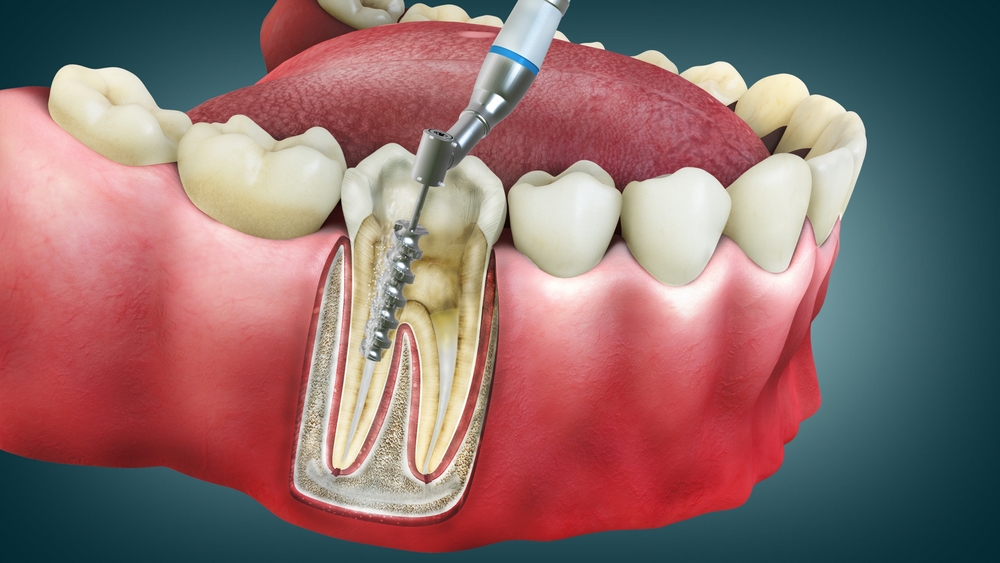 If the crack has reached the pulp, the inner tissue containing your tooth’s nerve, the nerve needs to be removed before a crown can be placed. Root canal therapy clears out the infected or damaged pulp, seals the root, and sets the tooth up to be restored. Despite the reputation, modern root canals are far more comfortable than people expect.
Tooth Extraction
When a crack extends below the gumline or the tooth has split through the root, there’s no way to save it. Dr. Munro will perform the extraction and walk you through replacement options. Dental implants are typically the closest thing to a natural tooth in terms of function and appearance.
After the Treatment of a Cracked Tooth: Recovery and Care
Caring for a tooth after a chip or fracture involves being careful with the affected tooth.
- Stick to soft foods for at least 48 hours after any procedure on the cracked tooth
- Avoid chewing on that side until Dr. Munro gives you the all-clear
- Take prescribed medications as directed; finish any antibiotics completely
- Rinse gently with warm salt water two to three times daily
- Attend your follow-up appointment, especially if a crown is involved
If you grind your teeth at night, a custom night guard will protect both natural teeth and any restorations from the same kind of stress fractures that may have contributed to the break in the first place.
Frequently Asked Questions
I bit down on something hard, and now one of my teeth feels really weird when I chew. Did I crack it?
Quite possibly. Pain or discomfort, specifically when biting down, especially if it eases up right after you release, is a classic sign of a cracked tooth. Come in for an exam. Cracked tooth syndrome can be tricky to diagnose, but Dr. Munro has tools to help isolate exactly which tooth is causing the problem.
Part of my tooth broke off, but I'm not in much pain. Can I wait a few days?
A few days is generally okay for a minor chip with no pain. Cover any sharp edges with wax and avoid that side. But don’t put it off beyond that. An exposed tooth is vulnerable to bacteria, further fracture, and sensitivity. Call us, and we’ll find the earliest available slot.
My filling fell out, and now there's a big hole in my tooth. Does that count as a broken tooth?
Not exactly. A lost filling is its own issue, but the exposed tooth underneath is vulnerable. If the tooth itself feels stable, has no sharp edges, and minimal pain, use pharmacy dental cement or sugar-free gum as a temporary cover and call us. If there’s significant pain or you can see the tooth has cracked, call right away.
I cracked a tooth weeks ago, and it didn't hurt at first, but now it's really painful. What happened?
The crack likely reached the pulp or has allowed bacteria to get in. When that happens, an infection can develop. This needs to be treated promptly; the fact that it didn’t hurt initially doesn’t mean it was fine. Call us now.
I ground my teeth for years. Does that make me more likely to crack a tooth?
Yes. Bruxism puts tremendous force on teeth over time, which weakens them and creates micro-fractures that can eventually become full cracks. A custom night guard from Parkview Dental is one of the best preventive steps for heavy grinders.